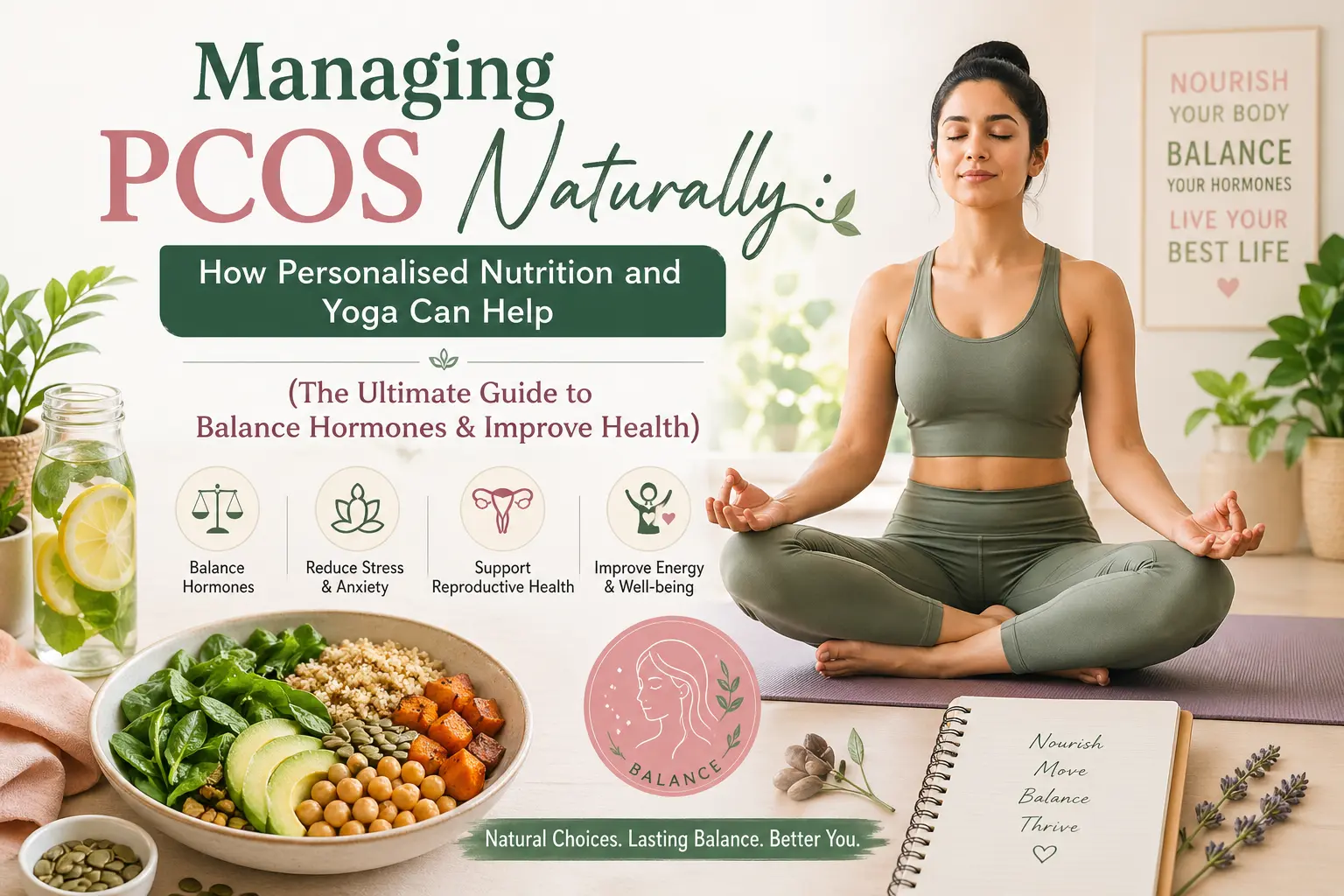
You already know that PCOS affects your hormones, weight, and overall well-being, and you’ve probably tried diets or workouts to manage it. But most approaches miss one crucial factor: personalisation and the connection between nutrition and mind-body practices. In this guide, you’ll learn how tailored nutrition and yoga can work together to naturally manage PCOS and improve your long-term health.
Key Takeaways
- PCOS is a hormonal disorder linked to insulin resistance, inflammation, and metabolic imbalance.
- Personalized nutrition balances blood sugar and supports hormone health through tailored food choices.
- Low glycemic index diets improve PCOS symptoms by stabilizing insulin levels.
- Yoga reduces stress hormones and enhances insulin sensitivity in women with PCOS.
- Combining diet and yoga creates a holistic system that addresses both metabolic and hormonal issues.
- Consistency in lifestyle habits drives long-term results, not short-term fixes.
What Is PCOS and What Causes It?
PCOS (Polycystic Ovary Syndrome) is a hormonal disorder characterized by irregular periods, excess androgen levels, and ovarian cysts.
First, PCOS affects how your ovaries function and how your body regulates hormones like insulin and testosterone. For example, many women with PCOS experience missed periods, acne, or unwanted hair growth due to hormonal imbalance.
Moreover, PCOS is strongly linked to insulin resistance, where your body struggles to use insulin effectively. For example, this can lead to higher blood sugar levels and weight gain over time.
Common Causes of PCOS
- Hormonal imbalance – Elevated androgens disrupt ovulation
- Insulin resistance – Affects up to 70% of women with PCOS — Source: NIH, 2023
- Genetics – Family history increases risk
- Chronic inflammation – Triggers metabolic dysfunction
Common Symptoms
- Irregular or absent periods
- Weight gain or difficulty losing weight
- Acne and oily skin
- Hair thinning or excess facial hair
- Fertility challenges
PCOS is not just a reproductive condition—it is a metabolic disorder affecting the whole body.
Why Is Lifestyle Management Important for PCOS?
Lifestyle management is essential for PCOS because it addresses the root causes, such as insulin resistance and hormonal imbalance.
First, medications may help manage symptoms, but they rarely fix underlying issues. For example, birth control pills regulate periods but don’t improve insulin sensitivity.
Moreover, long-term lifestyle changes can significantly improve outcomes. Research shows that 5–10% weight loss can improve ovulation and hormone levels — Source: CDC, 2022.
Why Natural Management Works
- Improves insulin sensitivity naturally
- Reduces inflammation and cortisol levels
- Supports sustainable weight management
- Enhances fertility outcomes
Lifestyle changes are the foundation of long-term PCOS management, not just a supplement to treatment.
How Does Personalized Nutrition Help Manage PCOS Symptoms?
Personalized nutrition for PCOS involves tailoring diet choices to balance blood sugar, reduce inflammation, and support hormone health.
First, not every diet works for every woman with PCOS. For example, some may benefit from low-carb diets, while others need balanced macronutrients depending on their lifestyle and metabolism.
Moreover, nutrition directly impacts insulin levels, which are central to PCOS. A study found that low glycemic diets improve insulin sensitivity by up to 30% — Source: Journal of Clinical Endocrinology, 2021.
Key Dietary Principles for PCOS
1. Focus on Low-Glycemic-Index Foods
A low glycemic index diet is one of the most effective dietary strategies for managing PCOS symptoms.
For example, foods like oats, lentils, and leafy greens release sugar slowly, preventing insulin spikes.
2. Balance Macronutrients
- Protein – Supports muscle and satiety
- Healthy fats – Regulate hormones
- Complex carbs – Provide sustained energy
3. Reduce Inflammation
Anti-inflammatory foods include:
- Turmeric
- Berries
- Fatty fish
- Nuts and seeds
Food is not just fuel—it directly influences hormonal balance.
What Are the Best Foods to Eat for PCOS?
The best foods for PCOS are those that stabilize blood sugar, reduce inflammation, and support hormone balance.
First, whole foods should form the foundation of your diet. For example, vegetables, legumes, and lean proteins help regulate insulin levels effectively.
Foods to Include
- High-fiber foods – Broccoli, spinach, quinoa
- Lean proteins – Chicken, tofu, eggs
- Healthy fats – Avocado, olive oil
- Low-GI carbs – Sweet potatoes, oats
Foods to Avoid
- Processed sugar
- Refined carbs (white bread, pastries)
- Sugary drinks
- Excess dairy (for some individuals)
Sample PCOS Meal Plan
| Meal Time | Example Meal |
| Breakfast | Oats with chia seeds and berries |
| Lunch | Grilled chicken salad with olive oil |
| Snack | Nuts and green tea |
| Dinner | Quinoa with vegetables and tofu |
Eating whole, unprocessed foods consistently improves insulin regulation.
How Does Yoga Help Balance Hormones in PCOS?
Yoga helps manage PCOS by lowering cortisol levels and improving insulin sensitivity.
First, stress plays a major role in worsening PCOS symptoms. For example, high cortisol levels can increase insulin resistance and disrupt hormones.
Moreover, yoga activates the parasympathetic nervous system, which promotes relaxation. Studies show that regular yoga practice reduces testosterone levels in women with PCOS — Source: International Journal of Yoga, 2020.
Benefits of Yoga for PCOS
- Reduces stress and anxiety
- Improves hormonal balance
- Enhances blood circulation to the ovaries
- Supports weight management
Mind-body practices are essential for hormonal health, not optional extras.
What Are the Best Yoga Poses for PCOS Relief?
The best yoga poses for PCOS are those that stimulate pelvic organs, reduce stress, and improve circulation.
First, consistency matters more than intensity. For example, practicing 20 minutes daily is more effective than occasional long sessions.
Recommended Yoga Poses
1. Butterfly Pose (Baddha Konasana)
- Improves blood flow to the ovaries
- Helps regulate menstrual cycles
2. Cobra Pose (Bhujangasana)
- Stimulates abdominal organs
- Supports hormonal balance
3. Bridge Pose (Setu Bandhasana)
- Activates thyroid and reproductive organs
- Reduces stress
4. Child’s Pose (Balasana)
- Promotes relaxation
- Lowers cortisol
Suggested Routine (15–30 Minutes)
- Warm-up stretches – 5 minutes
- Core poses – 15 minutes
- Pranayama (breathing) – 5–10 minutes
Yoga works best when practiced consistently, not intensely.
How Can You Create a Daily Routine for PCOS Management?
A daily routine for PCOS management combines nutrition, movement, and stress reduction into a sustainable lifestyle system.
First, structure helps build consistency. For example, starting your day with yoga and balanced meals sets the tone for hormonal stability.
Sample Daily Routine
- Morning: Yoga + protein-rich breakfast
- Afternoon: Balanced lunch + short walk
- Evening: Light dinner + relaxation practices
Habit Tracking Tools
- Meal planners
- Fitness apps
- Journals
Consistency beats perfection in managing PCOS.
Can Diet and Yoga Improve Fertility in PCOS?
Diet and yoga can improve fertility in PCOS by restoring hormonal balance and supporting ovulation.
First, insulin resistance directly impacts ovulation. For example, stabilizing blood sugar can help regulate menstrual cycles.
Moreover, stress reduction through yoga improves reproductive hormone signaling. Studies show that lifestyle changes improve fertility outcomes in up to 50% of women with PCOS — Source: Fertility Research Journal, 2022.
Natural approaches enhance fertility by addressing root causes, not just symptoms.
How Long Does It Take to See Results from Natural PCOS Management?
Natural PCOS management typically shows results within 8–12 weeks with consistent lifestyle changes.
First, hormonal systems take time to respond. For example, improvements in energy and mood may appear within weeks, while cycle regulation may take longer.
Moreover, results depend on consistency. Women who follow structured routines often see faster improvements.
Small daily changes compound into significant long-term results.
Tools and Practical Applications for Managing PCOS
PCOS management tools help track habits, nutrition, and progress for better consistency.
First, digital tools simplify lifestyle tracking. For example, apps can monitor meals, workouts, and menstrual cycles.
Recommended Tools
- MyFitnessPal (nutrition tracking)
- Flo (cycle tracking)
- Nike Training Club (fitness routines)
Practical Tips
- Prep meals weekly
- Set reminders for workouts
- Track symptoms and progress
What’s Next: Creating Your Personalized PCOS Plan
Creating a personalized PCOS plan involves combining nutrition, yoga, and lifestyle tracking into a structured system.
First, start with small, realistic changes. For example, replace refined carbs with whole foods and add 15 minutes of yoga daily.
Step-by-Step Plan
- Assess current lifestyle
- Build a balanced meal plan
- Add daily yoga routine
- Track progress weekly
- Adjust based on results
When to Consult a Professional
- Persistent symptoms
- Fertility concerns
- Severe hormonal imbalance
Personalization is the key to long-term success in PCOS management.
Conclusion
Managing PCOS naturally requires a consistent, personalized approach that combines nutrition and yoga.
First, balanced nutrition helps regulate insulin and hormones. Moreover, yoga reduces stress and supports overall well-being. Together, they create a powerful system for long-term health.
That said, you don’t need perfection—you need consistency. By making small, sustainable changes, you can take control of your health and manage PCOS naturally.