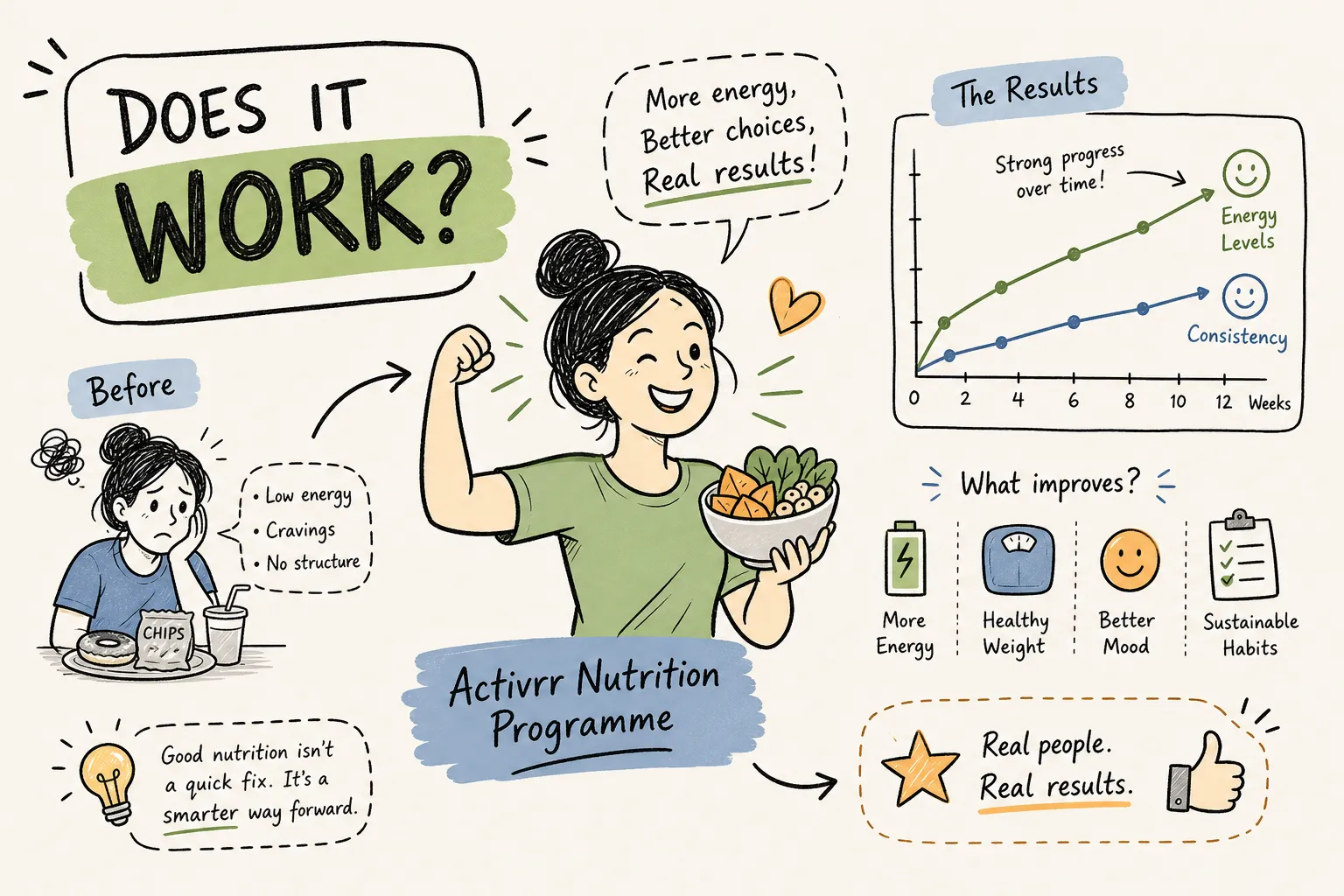
You’re eating reasonably well. You’ve cut back on sweets, added a morning walk, and you still can’t explain why the scale hasn’t moved in three months. The frustration isn’t unusual, and the problem is almost never effort. It’s the absence of a plan built around your specific metabolism, hormones, and daily schedule. Generic calorie targets were never designed for your body in the first place.
This article examines the Activrr nutrition program (also referred to as the Activrr nutrition programme): what the clinical evidence says about personalised nutrition plans, how the programme actually works, what results look like across different client profiles, and the questions worth asking before you commit. If you’ve been given generic advice that hasn’t delivered, the context below will help you understand why, and what a structured alternative looks like.
What the research actually says about structured nutrition programmes
The clinical numbers behind personalised plans
A published randomised controlled trial on an active nutrition programme followed 60 participants (49 women and 11 men, mean age 38) over 60 days. The nutrition group lost approximately 6.5 lb during that period; the usual-care group gained around 2 lb. That’s a meaningful difference, and it held across secondary markers too: blood pressure dropped roughly 5 mm Hg, triglycerides fell approximately 12 mg/dL, and self-reported measures including motivation, endurance, and physical appearance all improved with statistical significance (p < 0.001). Importantly, the programme was well-tolerated, with no significant increase in hunger. (Note: this represents a single trial and independent replication would further strengthen these findings.)
These numbers matter because they reflect what a structured, coached plan can achieve even in a relatively short window, without the hunger and misery that crash diets typically produce. Sixty days is also a widely used minimum threshold in metabolic research, making it a meaningful benchmark rather than an arbitrary cut-off.
How this fits a broader body of evidence
A CDC-led meta-analysis reviewed 14 randomised controlled trials on structured nutrition and physical activity interventions. The pooled weight loss was −2.59 kg versus control, and all 14 studies showed weight loss relative to the control groups. That is not one lucky trial. It is a pooled short-term benefit across diverse populations and study designs, though it’s worth noting that other systematic reviews have found variable effect sizes, and long-term data across personalised interventions remain limited. What this body of evidence does confirm is that structured programmes with individual calibration tend to outperform generic advice, particularly over shorter intervention windows. This is the evidence base on which a well-designed weight management programme like Activrr builds its approach, rather than trend-based rules that ignore individual variation.
Activrr nutrition program: how macro science meets hormone-aware planning
Why calorie counting alone fails for many Indian adults
Standard calorie-deficit advice ignores the macro composition of meals, which directly affects hunger hormones, blood sugar stability, and muscle retention. Many people following a carbohydrate-focused Indian meal pattern, rice, roti, poha, upma, may have relatively low protein intake between meals. This macro imbalance can stall fat loss even when total calories appear reasonable, because high-carbohydrate, low-protein meals drive hunger cycles and reduce satiety signals. Indian dietary survey data supports the observation that protein intake in many population groups falls below recommended levels, particularly at breakfast and lunch; national guidance such as the NIN dietary guidelines provide practical context for typical intake patterns. The Activrr nutrition program begins by calibrating the protein, fat, and carbohydrate split for each person’s body weight, activity level, and health history, structurally different from a diet chart that assigns the same portion sizes to every client.
The hormone-aware layer: thyroid, PMOS, and metabolic health
For women managing hypothyroidism or PMOS, conditions that are common among many Activrr clients, the same macro plan that works for a metabolically healthy adult can actively work against progress. Hypothyroidism slows basal metabolic rate; a plan that doesn’t account for this will consistently underperform. Hormone-aware planning adjusts for these conditions through meal timing, nutrient-sufficiency considerations relevant to thyroid health (such as adequate iodine, selenium, and iron), and dietary strategies that may support reduced inflammation. The link between specific dietary choices and cortisol-driven fat retention is an area of active research, and the approach here is to apply evidence-informed strategies rather than making definitive causal claims. This condition-specific approach distinguishes a clinically grounded nutrition plan from a weight-loss app that assigns the same 1,500-calorie template to everyone, regardless of whether they’re managing a hormonal condition.
Real-world results: what Activrr clients actually see
Busy professionals and the 60-day benchmark
Working professionals often arrive at Activrr with a recognisable pattern: erratic meal timings, heavy carbohydrate loads at dinner, minimal protein through the day, and a belief that they’re simply too busy to eat well. When macros are corrected and meal timing is structured around a corporate schedule, the changes that emerge within 60 days extend well beyond the scale. Several workplace studies on personalised nutrition report improvements in weight, BMI, triglycerides, and subjective markers such as energy levels and sleep quality. Clients describe reduced mid-afternoon energy dips, steadier focus through the afternoon, and the practical relief of not relying on caffeine to push through the second half of the day; for related practical tips see Activrr’s Nutrition Guides, Healthy Eating Tips & Wellness Advice | Activrr.
Thyroid patients and the difference a targeted plan makes
Thyroid patients typically arrive after months or years of weight gain despite eating at a low calorie intake, having been told to simply eat less and move more. What changes with hormone-aware coaching is that the plan accounts for slower metabolic rate, adjusted macronutrient needs, and the foods and meal patterns that avoid interfering with thyroid function, including attention to levothyroxine absorption and nutrient adequacy. The measurable shifts are gradual but consistent: reduced bloating, steadier energy, and weight movement that wasn’t happening on generic plans. This is Activrr’s disease-specific nutrition guidance applied in practice.
What to check before you enrol in any nutrition programme
Medical screening and safety: the non-negotiables
Any reputable personalised nutrition programme should conduct a structured intake process before day one. For anyone managing diabetes, hypertension, or thyroid disease, this means a review of current medications and supplements, dietary changes can interact with drug dosing, particularly for insulin, antihypertensives, and levothyroxine, as well as baseline blood pressure (Nutritionist for High Blood Pressure, Activrr) and relevant lab markers including fasting glucose, HbA1c, lipid panel, kidney function, and TSH where applicable. Conditions like kidney disease or pregnancy require additional clinical oversight and should be clearly flagged at intake. A well-designed programme captures this information so that coaching is calibrated safely from the outset, not adjusted reactively after something goes wrong. When evaluating any provider, including Activrr, confirm that their intake process covers these areas before you commit.
The questions worth asking your coach before day one
Before paying for any programme, put these questions directly to the team:
- How is my plan personalised to my specific health conditions, not just my weight goal?
- What happens to my plan if I plateau after the first few weeks?
- How does the programme address hormone-related weight resistance, such as thyroid or PMOS?
- How is progress tracked beyond the weighing scale?
These aren’t trick questions. They’re the standard that separates a structured, evidence-backed coaching programme from a PDF diet plan sold online. A coaching model worth paying for should address all four, with a clear process for adjustment, rather than offering a fixed template that ignores how your body responds.
Activrr nutrition program: the bottom line
Taken together, a single RCT showing 6.5 lb of loss over 60 days and a 14-study meta-analysis showing −2.59 kg pooled weight loss make a clear, evidence-based case for structured nutrition over generic advice. That said, the branded programme has one independent trial to date, and the meta-analysis covers a range of multicomponent interventions rather than this specific programme alone, independent replication and longer follow-up would strengthen the picture further. What the evidence does establish is that programmes with individual calibration, hormonal awareness, and active coaching consistently outperform one-size advice, particularly for Indian adults navigating macro-imbalanced diets and demanding work schedules; this aligns with findings that personalised nutrition can be more effective than generalised diet advice.
The Activrr nutrition program is built around these factors, specifically for the Indian context. According to the company, it functions as a coaching system that adjusts for individual macros, hormonal health, and daily schedule, with clinical foundations that go beyond what a calorie calculator can offer. National guidance such as the FAO India dietary guidelines provides context for culturally appropriate choices that such a programme can work within. If eating carefully and seeing no results sounds familiar, the starting point isn’t trying harder. It’s a plan that understands why your body isn’t responding, and builds from there.
If eating carefully and seeing no results sounds familiar, the answer isn’t more willpower. It’s a plan designed for your body, your hormones, and your life. Personalized Diet Plans & Online Nutrition Consultation | Activrr and start with a plan that’s actually built for you.
Frequently asked questions about the Activrr nutrition program
Is the Activrr nutrition program suitable for people with thyroid conditions or PMOS?
The programme is designed with hormone-aware planning that accounts for conditions such as hypothyroidism and PMOS. Clients managing these conditions should confirm during intake that the coaching team will review their current medications and lab markers before a plan is assigned.
How long before results are visible?
Clinical evidence suggests that structured, personalised programmes can produce measurable metabolic and subjective improvements within 60 days. Individual results vary depending on starting health status, consistency, and how well the plan is tailored to a person’s specific needs.
Does the programme work for vegetarians following a typical Indian diet?
Yes. Macro calibration for a carbohydrate-heavy Indian meal pattern, including vegetarian and predominantly plant-based diets, is a core part of the planning process. The focus is on correcting the protein-to-carbohydrate ratio within familiar food choices rather than replacing the diet entirely.
What medical screening does the programme require before starting?
Any credible nutrition programme should review medications, baseline blood pressure, and relevant labs (fasting glucose, HbA1c, lipid panel, TSH) before assigning a plan. Verify that the specific provider you choose follows this process at intake.